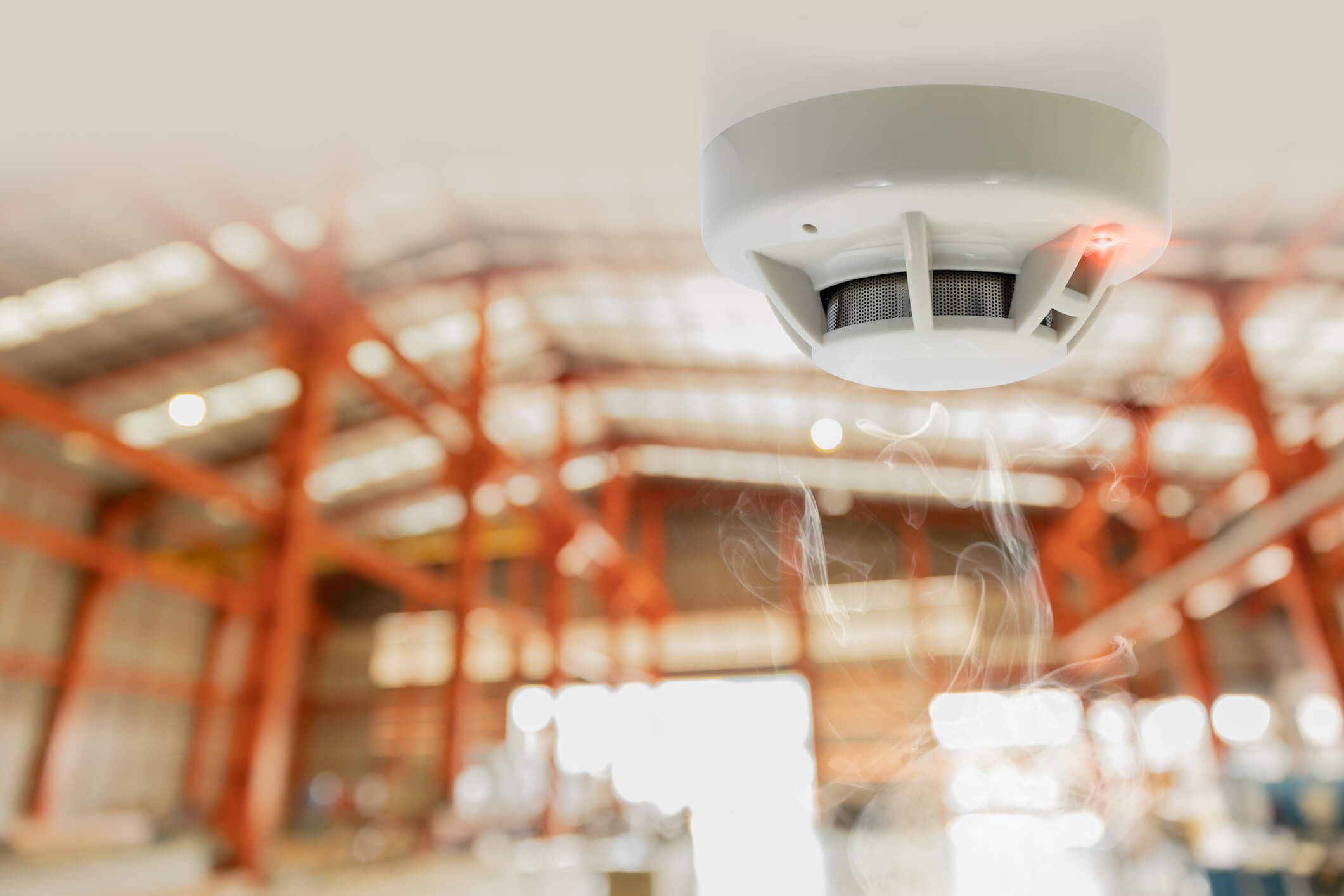
Optical beam smoke detector installed in a high-bay building

Optical Beam Smoke Detectors (Fire Beams)

Wide-area detection for large open spaces

DACT is a BAFE SP203-1 accredited fire detection contractor, designing, installing and maintaining optical beam smoke detectors for facilities managers, main contractors and building owners across the UK.

A beam detector projects infrared light across an open space between a transmitter and a receiver or reflector. Smoke entering the beam path attenuates the signal, and the detector reports to the fire alarm panel. One beam covers a width that would otherwise need a line of point detectors, which is why beams are specified in buildings where point detection is impractical.

Beam detectors are certified to BS EN 54-12, the product standard for line detectors using an optical beam. Their selection, siting and spacing are governed by BS 5839-1, the same code that sets the category of your wider commercial fire alarm system.

Beam Detector Types

End-to-end, reflective and auto-aligning

All beam detectors work on the same principle, but they differ in how the optics are arranged and how alignment is maintained. The choice affects cabling, access and long-term maintenance cost.

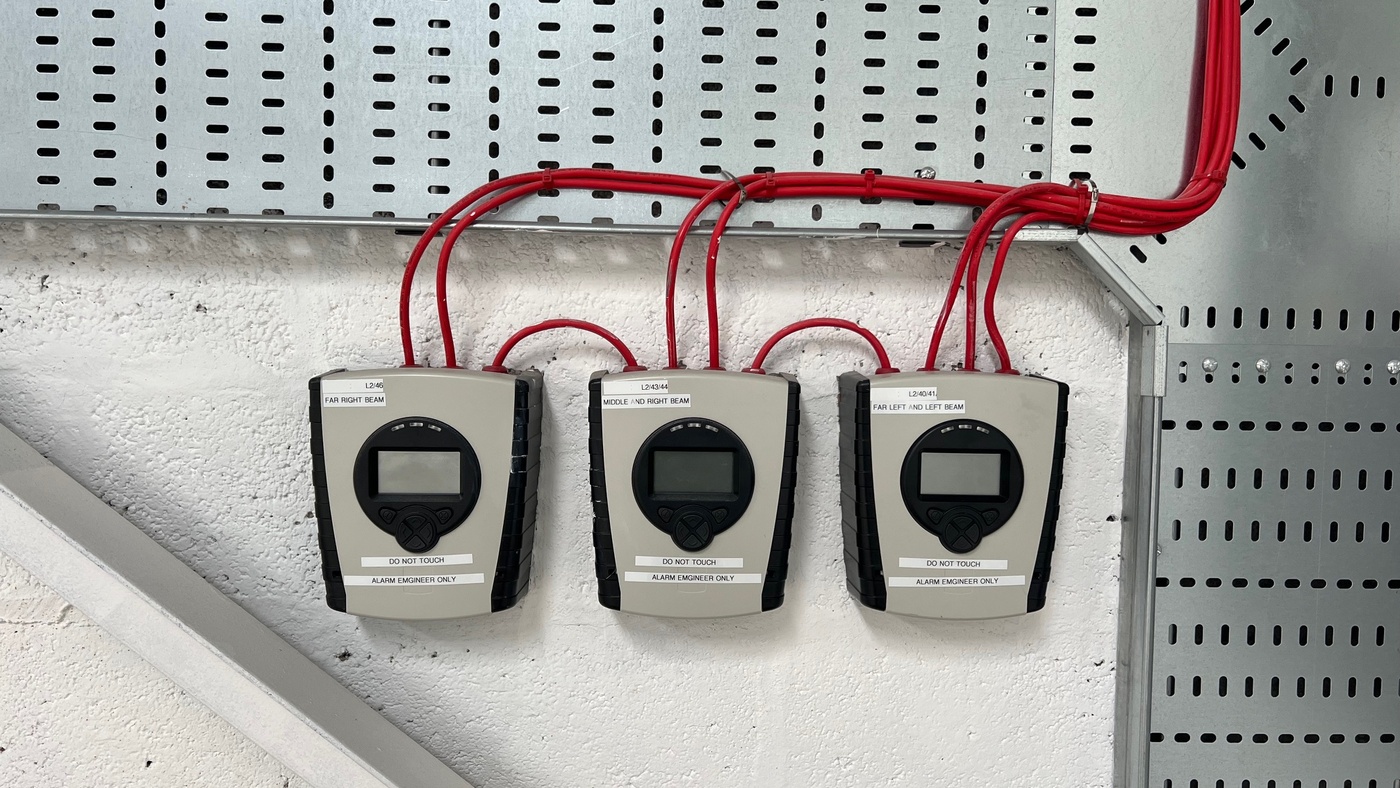
  • End-to-end. Separate transmitter and receiver mounted at opposite ends of the protected area. Both units need power and cabling, which suits buildings where containment already runs to both walls.
  • Reflective. Transmitter and receiver in one head, with a passive reflector opposite. Only one end needs cabling, which is usually the cheaper and faster installation.
  • Auto-aligning. Motorised optics that compensate for building movement. Specified where structures flex with temperature or loading, which is common in steel-framed high-bay warehouses.
  • Low-level controllers. An accessory rather than a type, allowing test and service from ground level instead of hiring access equipment for every visit.

Whichever type is specified, the detector must carry BS EN 54-12 certification to be used in a compliant system.

Key Benefits

Coverage, access and whole-life cost

Beam detection is chosen on procurement grounds as much as technical ones. The arguments that matter to a specifier are:

  • Fewer devices across a large floor plate. One beam covers a width that would otherwise need a run of point detectors, which reduces both the installed device count and the number of items to service each year.
  • Detection where point detectors underperform. In tall spaces smoke can spread into a warm layer below the ceiling and never reach a ceiling-mounted detector. A beam sited at the right height intercepts it.
  • Tolerance of dust and dirt. Warehouses and production areas generate airborne contamination that drives false alarms on point detection, and every false alarm carries a business interruption cost.
  • Servicing from ground level. With a low-level controller, routine testing does not require hiring access equipment or shutting down an aisle, which is where the whole-life saving actually sits.
  • Integration with evacuation. Beams report to the fire alarm panel like any other detector, so they can trigger zoned evacuation through a PA/VA voice alarm system in buildings too large for sounders alone.

We design, install and maintain beam detection as part of a single fire and security package — see our full range of commercial services.

image pattern

Installation Process

Getting the survey right before installation

Alignment is the difference between a beam that works and one that generates fault signals for the life of the building.

  • Mounting. We fix transmitter, receiver and reflector to stable structural elements rather than cladding or services, so alignment survives normal building movement.
  • Alignment. We align each beam and record the received signal strength, either manually or using the detector’s own alignment function.
  • Integration. We wire the detectors back to the fire alarm panel to the manufacturer’s instructions and the requirements of BS 5839-1.
  • Commissioning. We test alarm and fault activation on every beam, brief your staff, and issue the certification your inspector will ask for.

Beam detectors need periodic servicing to stay compliant. You can cover them under the same maintenance and response tiers as the rest of your fire systems, with scheduled PPM aligned to BS 5839 and 24/7 emergency callout.

image pattern image pattern

Industries We Serve

Warehouses, atriums and heritage buildings

Beam detection is specified where ceiling height, building volume or fabric makes point detection impractical:

  • Warehouses and distribution centres. High roofs and racking, where a line of point detectors would be costly to install and harder to reach for service.
  • Atriums in hotels, offices and shopping centres. Tall open volumes where smoke can stratify below the ceiling before reaching a point detector.
  • Manufacturing and industrial units. Dusty or dirty environments that would generate false alarms on point detection.
  • Heritage buildings and museums. Minimal fixings and visual intrusion, which matters where the fabric is listed.
  • Sports halls, theatres and auditoria. Large clear spans with limited access above floor level.

Where a space needs earlier warning than beams can give, aspirating smoke detection is the usual alternative, and the two are often combined in one building.

Contact Us

Need help with your security systems? We’re here to assist! Whether you have questions about system design, require expert installation, or need reliable repairs and maintenance, our team has the knowledge to help. Fill out the form or give us a call for friendly advice and support.

Content Pattern

Thank you. We will be in touch soon

There was an error with the form. Please check and try again.

This site is protected by reCAPTCHA and the Google Privacy Policy and Terms of Service apply.